Stacking the Shelves: How Small Presses Are Cracking the Code on School Libraries and Classroom Reading Lists
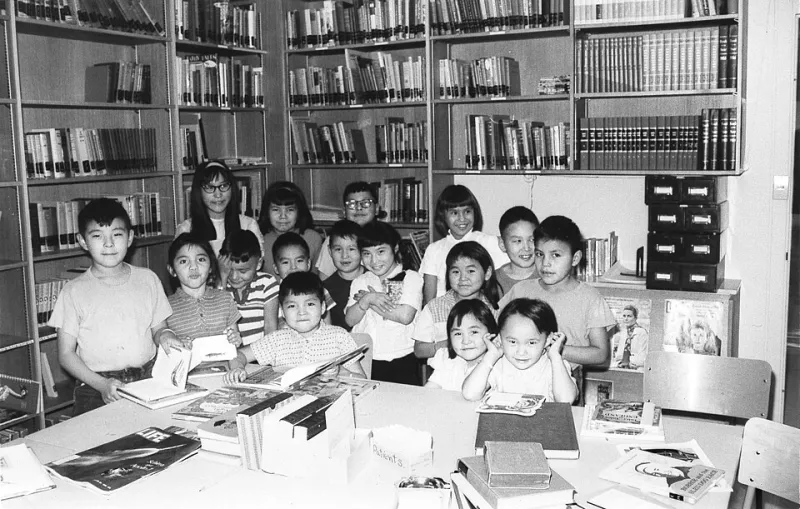
Photo: Provincial Archives of Alberta, No restrictions, via Wikimedia Commons
Walk into most school libraries in America and you'll notice something pretty quickly: the shelves are dominated by the same familiar imprints. Scholastic. HarperCollins. Penguin Young Readers. The architecture of what students read has, for generations, been shaped by publishers with massive marketing budgets, established sales reps, and cozy relationships with district curriculum coordinators. But something is shifting—slowly, stubbornly, and with a lot of heart.
Across the country, independent presses are finding ways into school libraries and classroom reading lists that didn't exist even a decade ago. It's not happening through some grand disruption. It's happening through librarians who care deeply about representation, teachers who are tired of waiting for big publishers to catch up, and small press founders who decided to show up in person—sometimes literally—at school board meetings and educator conferences.
Why Schools Have Always Been a Tough Room
The barriers are real, and it's worth naming them plainly. School districts, especially larger ones, typically purchase books through approved vendor lists and rely on review journals like School Library Journal, Kirkus Reviews, and Booklist to vet new titles. Getting reviewed in those publications has historically required a level of institutional access that most indie presses simply don't have. Add to that the challenge of navigating district procurement systems, competing with bulk discount pricing from major publishers, and the sheer bandwidth required to pitch title by title to hundreds of individual librarians—and you start to understand why so many small presses have historically written off the school market entirely.
But here's the thing: the gatekeeping was never as airtight as it looked from the outside.
The Librarian Factor
If there's one group driving the indie-in-schools movement, it's school librarians—and they'll be the first to tell you that their professional networks operate very differently from the top-down sales funnel big publishers rely on.
Organizations like the American Library Association (ALA) and its youth-focused divisions have long championed diverse and independent voices. But the real action is happening at the grassroots level: state library associations, regional educator conferences, and—increasingly—social media communities where school librarians share recommendations, swap curriculum ideas, and call out gaps in traditional publishing.
When Lee & Low Books, a small New York-based independent press focused on multicultural children's literature, started showing up at state library conferences and building direct relationships with school librarians in the early 2010s, something clicked. Their titles started appearing on recommended reading lists not because a sales rep pushed them through a vendor portal, but because librarians trusted other librarians who had actually read the books and seen how students responded to them.
That word-of-mouth infrastructure—built on genuine relationships rather than advertising spend—turns out to be surprisingly powerful in an educational context.
Titles That Broke Through
The proof is in the stacks. A handful of indie-published titles have managed to land on state-level curriculum adoption lists or earn placement in district-wide reading programs in recent years, and their paths offer useful lessons.
Front Desk by Kelly Yang, published by Scholastic's Arthur A. Levine imprint (which operates with considerable independence), became a staple of fifth-grade classrooms partly because of grassroots educator buzz before any major institutional push. Meanwhile, smaller presses like Cinco Puntos Press (now an imprint of Lee & Low) have seen titles like The House on Mango Street maintain their classroom presence for decades through teacher loyalty and direct outreach rather than district mandates.
More recently, micro-presses focused on Indigenous and Latinx narratives have made inroads in states like New Mexico, Arizona, and California, where curriculum diversity mandates have created an opening that big publishers have been slow to fill. In those cases, the small press didn't just benefit from the policy shift—they helped create the conditions for it by being present in advocacy conversations.
The Direct-to-Educator Pipeline
One of the most effective strategies emerging from the indie press world is bypassing district procurement entirely and going directly to individual teachers and librarians. This sounds counterintuitive—school budgets are tight, and individual educators often don't have the authority to make bulk purchases. But it works, for a few reasons.
First, a teacher who discovers and loves a book will advocate for it loudly. They'll recommend it at department meetings, bring it up at curriculum review sessions, and—in some cases—spend their own money on classroom copies until the district catches up. Second, many schools have discretionary funds, PTA budgets, and grant money that can be accessed without going through the full vendor approval process.
Small presses that have figured this out are doing things like offering educator review copies with no strings attached, creating downloadable discussion guides and lesson plan resources (which make a librarian's job easier and signal that the publisher takes educational use seriously), and sponsoring presence at events like the National Council of Teachers of English (NCTE) annual conference.
What the Advocacy Layer Looks Like
Beyond individual relationships, there's a growing infrastructure of organizations doing systemic advocacy for indie voices in educational settings. Groups like We Need Diverse Books have pushed hard for both representation in children's publishing and explicit guidance for educators on how to find and vet titles from smaller publishers. The Cooperative Children's Book Center at the University of Wisconsin-Madison publishes annual data on diversity in children's publishing that has become a reference point for librarians and curriculum directors nationwide.
These organizations don't just champion representation in the abstract—they actively create pathways for indie titles to get visibility. When a small press gets a recommendation from We Need Diverse Books or lands on a curated list from a respected library professional organization, that carries real weight in a school district evaluation process.
Practical Lessons for Small Publishers
If you're running an indie press and you've been eyeing the school market, here's what the trailblazers suggest:
Show up where educators gather. State library conferences, NCTE, the International Literacy Association annual conference—these are the rooms where recommendations get made. A table at a book fair matters less than a genuine conversation with a librarian who covers your subject area.
Build your review trail. Getting reviewed in School Library Journal or earning a spot on a state library association's recommended list takes time and persistence, but it's not impossible. Start with smaller regional publications and educator blogs. Reviews accumulate.
Make educators' lives easier. A well-designed teacher's guide is not a nice-to-have—it's a signal that your book belongs in a classroom. Keep it practical, curriculum-aligned, and freely downloadable.
Find your champion. In almost every success story, there's a single librarian or teacher who became an early evangelist for a title. Cultivate those relationships. Send thank-you notes. Remember names.
Play the long game. School adoption cycles move slowly. A title that gets on a district's radar this year might not appear on a purchasing list for two or three years. Consistency and patience matter more than splashy launches.
The Bigger Picture
What's happening in school libraries right now isn't just a market opportunity for indie publishers—it's a cultural moment. Students who see their own lives reflected in the books on their classroom shelves carry that experience forward. The stories we hand children shape the stories they believe are possible for themselves.
Big publishers have always understood this, which is why they've fought so hard to control what gets assigned and shelved. But the ground is shifting. Educators are more connected, more vocal, and more intentional about representation than they've ever been. And independent presses—scrappy, mission-driven, and willing to show up in rooms that bigger publishers overlook—are increasingly the ones ready to meet that demand.
The rebellion is quiet, and it's happening one library shelf at a time. But it's real.