Your Books Are Invisible and You Don't Even Know It: The Metadata Problem Quietly Killing Indie Sales
Imagine spending two years writing a book. Another six months working with your small press to edit, design, and produce something genuinely beautiful. You launch it into the world, send out review copies, post on social media, maybe even score a mention in a regional paper. And then — almost nothing.
The book doesn't disappear. It just never quite arrives.
For a lot of indie presses across the country, that story is painfully familiar. And increasingly, publishing insiders are pointing to a culprit that doesn't get nearly enough attention: metadata. Specifically, the incomplete, inconsistent, or outright wrong product data that follows a book through the entire retail and library ecosystem — and either surfaces it to readers or buries it where no one will ever find it.
What Even Is Book Metadata?
If you're not deep in the publishing weeds, the word "metadata" probably sounds like something your IT department worries about. But for a book, metadata is essentially everything that describes it in a database: the title, subtitle, author name, ISBN, BISAC subject codes, age range, page count, format, price, territorial rights, description, and more.
When a reader searches Amazon for "queer coming-of-age fiction set in Texas" or a school librarian uses their catalog system to find "middle grade books about immigration," what they're actually doing is querying metadata. If your book's data doesn't match what they're looking for — or if it's missing entirely — your title simply doesn't show up. It doesn't matter how good the book is. It might as well not exist.
Big Five publishers have entire departments dedicated to this. They have metadata managers, distributor liaisons, and systems that push clean, complete data to dozens of retail and library platforms simultaneously. Most small presses have, at best, one overworked person handling it as part of a much longer job description.
The Specific Ways Things Go Wrong
Talk to anyone who's audited metadata for a small press catalog and you'll hear the same horror stories. Books filed under the wrong BISAC code — those standardized subject classifications that retailers and libraries use to categorize titles — so a literary novel about grief ends up shelved digitally next to self-help. ISBNs registered without a subtitle, making it nearly impossible for search algorithms to surface the book for relevant queries. Author names entered inconsistently across platforms, so the same person appears as three different people depending on where you look.
Then there are the description fields. A lot of indie presses upload a one-line description and call it done. But most major retail platforms are built to accommodate and reward richer, longer descriptions — the kind that include keywords readers actually use when they're browsing. Skipping that step is like opening a store and forgetting to put a sign out front.
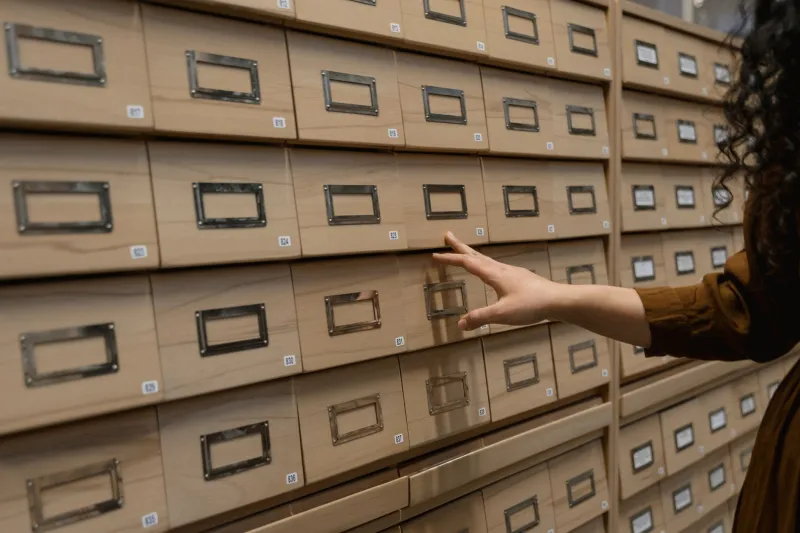
Library catalog systems have their own layer of complexity. MARC records — the standardized format libraries use to catalog books — need to be accurate and complete for a title to show up in a library's discovery system. If your distributor isn't supplying strong MARC data, librarians may not even know your book exists, let alone order it.
What Fixing It Actually Looks Like
A small literary press based in the Pacific Northwest — one that had been publishing quietly excellent fiction for nearly a decade — decided a few years ago to do a full metadata audit of their backlist. What they found was a mess. Roughly a third of their titles had incorrect or missing BISAC codes. Several had no subtitle listed anywhere in the retail system despite having subtitles on the actual covers. Author bios were missing from most entries.
They spent about three months cleaning it up. Working with their distributor, they updated records across Ingram, Baker & Taylor, and direct feeds to Amazon and indie retail platforms. They rewrote descriptions to be more search-friendly without losing their literary voice. They standardized author name formatting.
Within six months, several backlist titles that had been essentially dormant started moving again. One novel — published four years earlier to modest sales — saw a noticeable uptick in library orders after its MARC record was corrected and its subject classifications were updated to reflect the book's actual content more accurately.
That's not a miracle story. It's just what happens when the right information is finally in the right place.
The Tools Are There — If You Know Where to Look
The good news is that small presses don't have to figure this out entirely alone. Bowker, which manages ISBN registration in the US, offers resources through its Books In Print database for improving title records. Many distributors — including Ingram Publisher Services and Consortium — have metadata support teams that can walk small press clients through best practices.
The Book Industry Study Group (BISG) publishes detailed guidelines on metadata standards that are free to access and genuinely useful, even if they're not exactly beach reading. And a growing number of publishing consultants now specialize specifically in helping indie presses audit and optimize their catalogs.
There are also software tools built for exactly this problem. Firebrand Technologies' Title Management platform, for example, is designed to help publishers manage and distribute metadata across multiple channels from a single source. It's not free, but for a press with a substantial catalog, the investment can pay off quickly.
It's Not Glamorous. Do It Anyway.
Here's the honest truth: metadata work is not the reason most people get into independent publishing. Nobody launches a small press because they dream of auditing BISAC codes. The whole point is the books — the stories, the authors, the ideas that deserve to exist in the world.
But discoverability is the bridge between a book existing and a reader finding it. And right now, that bridge is broken for a lot of indie titles, not because the books aren't worthy, but because the infrastructure around them is incomplete.
The independent publishing world has gotten much better in recent years at talking openly about money, about sustainability, about the structural disadvantages small presses face in a market dominated by a handful of corporate giants. Metadata deserves a seat at that same table.
Because a book that can't be found is a story that can't be told. And that's a loss for everyone — the author, the press, and the reader who never knew what they were missing.
If you're a small press looking to start a metadata audit, BISG's free metadata best practices guide is a solid first stop. Your distributor's publisher services team is the next call to make.